
Thinking Differently

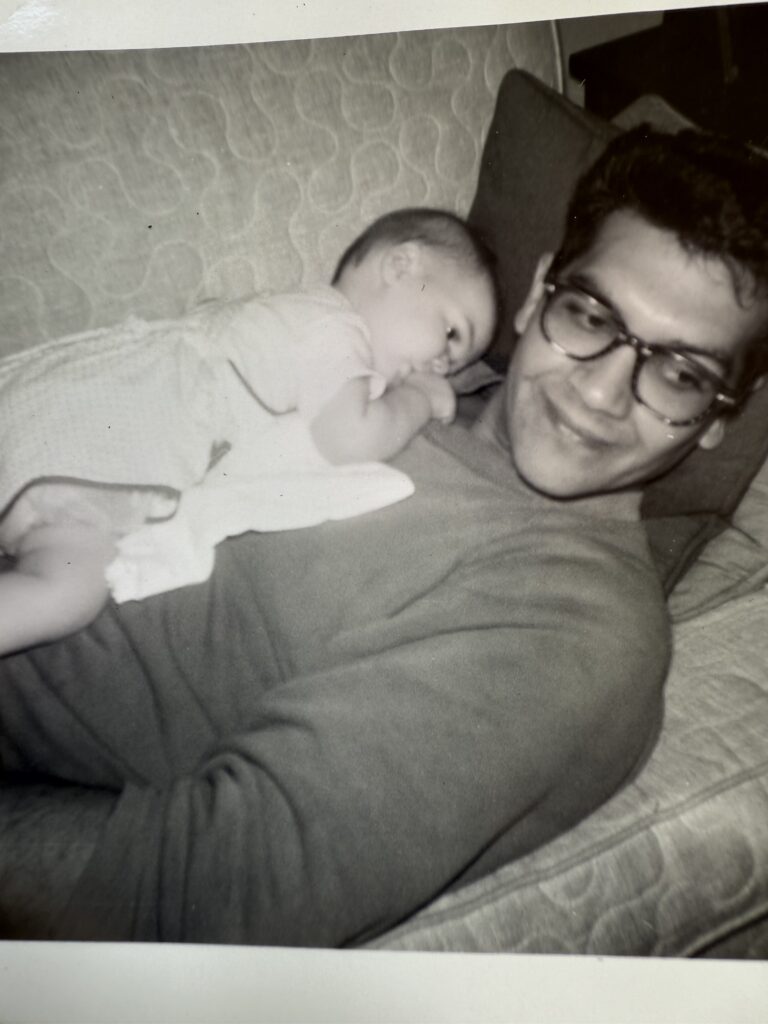
My father is at the end of his good, long life. These days his veins and arteries are failing. He has always been my redwood tree, tall and strong and straight and handsome; exotic and aloof and, at times, incomprehensible. But now the sap runs slowly, sometimes in fits and starts, sometimes so slowly he passes out and my brother or I have to shake him, hoping he’ll wake again.

Now, near the end of his life, he thinks differently. And that has me thinking differently. Thinking differently has been a wonder of mine for a long time, the source of so many questions. I know that I think differently from everyone else … but I also conform to a standard of thinking that doesn’t inspire derogatory or demeaning labels. So do my twin sons: They were born within 10 minutes of each other and raised in the same household by the same people, but even with the same inputs, they think differently from each other, and from everyone around them.

Living so close to the Sonoma Developmental Center (SDC) for so many years, and working in the schools for just as long, I’ve been immersed in the variety of thinking. Children think honestly and with unfettered diversity, even as teachers and parents enforce societal norms — which is important because otherwise there’d be chaos. Thinking like a bully, or in anger, or with too much sadness, warrants intervention, just as being dyslexic, or autistic, or otherwise neurodiverse warrants intervention. Those who think so differently that they are labeled developmentally disabled were once sequestered in state homes like the SDC. The thought was that everyone was more comfortable that way.

But I can’t help wondering how the ones who think so differently that they make us uncomfortable actually see the world. Is how they see the world any more or less valuable than how I see it? Is it any more or less true? How is it that, because of the labels put on their ways of thinking, they are somehow less than, marginalized, diminished?

Circling back to my father, his way of thinking differently has an uncomfortable label: vascular dementia. My brothers and I use our hands to describe how the dementia works: a plateau followed by a precipice, then a slow climb back to a plateau, but a lower one, then boom, another precipice. My father rights himself more slowly after every fall but rights himself nonetheless. He is a redwood tree.

The dementia means he can’t put numbers on certain things; the dementia means he sundowns, the dementia means he has sparks of humor and wisdom when he is, for a flash, the Pa from before. He has also become sweet in a quiet, almost childish way, but he is not a child. He is an old man, full of memory that misfires and cannot always be articulated.

He is in hospice care because he can no longer tolerate hospital care. The cure is now the same as the disease, if old age is a disease. His last hospitalization brought on yet another way of thinking differently: hospital delirium. It was a terrible marvel to witness. My father is blind, but with the delirium, he could see again.

“The doctor’s here,” he said, looking at the closed door of his hospital room. “I just saw him drive up.”

“Tracy, can you get me the scissors? They are right there,” he said, pointing at the blank hospital wall. “In the drawer next to the dishwasher.”

One morning I got a call from my brother, who’d gotten a call from my mother, who’d gotten a call from my father from his hospital bed. “How’d he dial the phone?” we wondered. And then I thought differently. “Maybe,” I said aloud, “Maybe with this dementia, when things misfire in his brain, maybe they can cause the optic nerve to see again …”

Talk about misfire. Turns out the nurse dialed the phone for him.

In his delirium, even with vessels leaking, a heart beating a unique rhythm that set off hospital alarms, and blindness, my father was agitated, and wanted to get up. The strap that kept him in place, for his safety, was outfitted with an apron that had pockets, a zipper, and other components he could manipulate. My mother and I, by filling the hospital room with our familiar voices, were able to settle him down, and he set about exploring the apron with his sensitive, graceful fingers. My mother watched in disbelief; I watched with fascination. To my way of thinking, my father, the carpenter, was trying to fix something. But because the apron looked like a toy, my mother thought he’d become a toddler, and she talked to him that way before she fled, struggling to cope with what she’d seen (and she’s seen so much).

When we brought him home, enveloped in the unexpected warmth of hospice, the delirium resolved and even the dementia eased. My father the redwood tree righted himself again, standing tall on a lower plateau. As we all — my father, my mother, my brothers, and I — meander toward a precipice we won’t see until we’ve gone over the edge, we are all thinking differently. We are thinking about how to make sure my father is comfortable, how to temper my mother’s anxiety, how to navigate the change, disorder, uncertainty, existentialism, sadness, and expectations that we are encountering at the end of his time with us.

My father the redwood tree will topple sooner rather than later. But already, his way of thinking differently has me thinking differently, about all the people who think differently, and the reasons they do. When redwood trees topple, they still have value. Left to lie, they become nurseries. As much as when we were children, my brothers and I are being nurtured by my father. He thinks differently and he’s showing us the way. He is giving us permission to think differently too, and remain beloved.
A Bear Ate Our Car and We Miss It

It seemed so appropriate. Right before he hauled the van away, the little man in the wide-brimmed straw hat turned on the emergency blinkers and honked the horn. It was exactly right, though he could never have known it. Because that was how the van had signaled its final distress.

The story is a classic. Let me take you back a month, to a driveway in a nice subdivision on the west shore of Lake Tahoe. It is five o’clock in the morning. The familiar sound of the van’s horn wakes me; my first thought is that its alarm is going off…but it doesn’t have an alarm anymore. I stumble out of bed to the window and peer outside into a gray-black predawn world. The van’s emergency blinkers are on, and the horn is honking intermittently. I’m confused, so I look closer…and see a great black hairy hulk occupying both front seats of the car.

“Martin,” I call to my sleeping husband. “There’s a bear in the van!”

He’s awake instantly, and leaps from the bed. Feeling brave, curious, and half-witted with drowsiness, he rushes outside; I remain at the window, watching. Afterward, he tells me that at first all he could see was a steamed-up front windshield. Then, like a playful child, the bear pressed its hairy muzzle against the glass. It saw Martin and began to tear the inside of the car apart. Martin saw it and began to cuss like a truck driver.

My husband has no choice, and he’s not happy about it. The bear is now in the driver’s seat, eating the van’s headliner, trying to claw through the roof to freedom. Martin dashes to the opposite side of the car, whips open the sliding door, and runs like hell.

So does the bear, off into the night. I’m now brave enough to leave the house, and stand with my husband at the van’s side, surveying the damage. Wires dangle from the ceiling, bits of the deck lamp are scattered on the front seats, the rear-view mirror and visors are strewn around the car, as are the remnants of one of our son’s smoothies, which had lured the bear inside. Not only are the emergency blinkers on, but so is another son’s metronome. Blinking orange hazard lights, a blaring horn, the incessant ticking of the metronome—the poor creature must have thought it was in some kind of hellish circus. No wonder it wanted out.

We empathized. We are not completely bear ignorant, having lived for fifteen years in bear country in Colorado, and having spent seven weeks traveling through bear country in Canada and Alaska. Never had we had such a close encounter. Never had we had such a thrill. Never had we intentionally left a smoothie in the car, because we know what bears will do for food. It wasn’t the bear’s fault. We wished it well.

But the van did not fare well. With nearly 250,000 miles on the odometer, we knew its swan song was most likely imminent. Still, we gave its salvage a shot, getting an estimate for repairs, talking about options. But the insurance company refused to pay for repairs that might have, ultimately, exceeded the value of the vehicle.

My husband’s regret was immediate. He recognized what I, in my excitement about finally getting a new car, would not see until the little man in the straw hat drove the van away. He knew we were losing an old friend. He knew how much of our history was tied up in the metal and plastic and cloth of what we called, affectionately, the Starship. It was a perpetual motion machine, hauling our sons to play dates and to their first days of kindergarten, transporting new puppies to dog parks and scared kitties to the vet’s office. It carried thousands of dollars of groceries, home improvement supplies, and recreational equipment. It wrote books with me, about Lake Tahoe and Lassen Volcanic National Park, Point Reyes National Seashore and California’s missions and presidios. And, when everyone said we were fools for even considering the idea, that great old van ferried us north to the Top of the World in the Yukon and Alaska. It crossed mighty rivers on metal-bottomed bridges, the Klondike, the Stikine, the Pelly, the Yukon; it wound through the Alaska Range in the shadow of Denali, it rested on the beaches at the toe of the Kenai Peninsula. More than 210,000 miles on the odometer, hauling a tent trailer, and nary a breakdown. That flat tire, of course, was not its fault…

The salvage company called to say they’d haul it away sometime during the next two business days. By the time the second day rolled around, a shiny new car was parked in the driveway, with an infantile 19,000 miles on the odometer. When I got back from running errands in the new car, I found myself strangely reassured to see the van’s broad Zorro smile; it was still parked on the gravel in front of the camper. Call me silly, but I really thought they’d forgotten about it, and that we’d get to keep it. Use it for … I don’t know … garden art …

But then the bright yellow flatbed truck drove by, and I knew the van’s time had come. The fellow in the straw hat parked down the road, then walked back up, climbed in, started it up, and drove it off. I furiously swept leaves around the driveway, scolding myself for being so emotional, for being so materialistic. I was mourning, after all, for a stupid car!

But this was no ordinary car. Not anymore. I looked at the new car, asked it please to treat us as well as the Starship, then ran down the garden path to the fence along the road, where I hunkered behind a bay tree and watched the little man in the straw hat prepare the Starship for departure. He opened doors, adjusted chains, and finally turned off the emergency blinkers. I hunkered down, and yes, I wept. And I wondered at the things that hold our memories. I thought about the dear friend who lost her mother when we were teenagers. She once complained that her father’s new wife, of whom she was fond, refused to give her a stool that had belonged to her mother, and how that filled her with great sorrow. A stool, a block of wood and fabric, a little thing … yet in that stool, Kelly knew her mother, felt her mother, could touch her mother. A car, I know, holds no candle to that kind of remembrance. But it holds memories nonetheless—in our fortunate sakes, of so many good times—and I regret its loss.

I can only pray that our new shiny car, which shifts so easily, feels so cozy, smells so new, treats us as well as our old van. I’m glad that I’m not just “getting over it.” It’s shallow, it’s American, but it’s real. The Starship will be missed.