
Eldridge Gone Wild

On the last day of summer, I took a long walk around the former campus of the Sonoma Developmental Center (SDC). I was following up on an ongoing story about who is responsible for maintenance of the site now that the State of California, which owns the property, has stopped taking care of it. The money dried up in June, and despite repeated queries to both state and county elected officials and bureaucrats, clear answers have not been forthcoming.

The walk was lonely, hot, melancholy, and nostalgic. I’m a fan of places with long histories, especially when they show their age. The evolution of the Eldridge campus from abandoned to haunting in these last few months has lent it a sweet vulnerability.

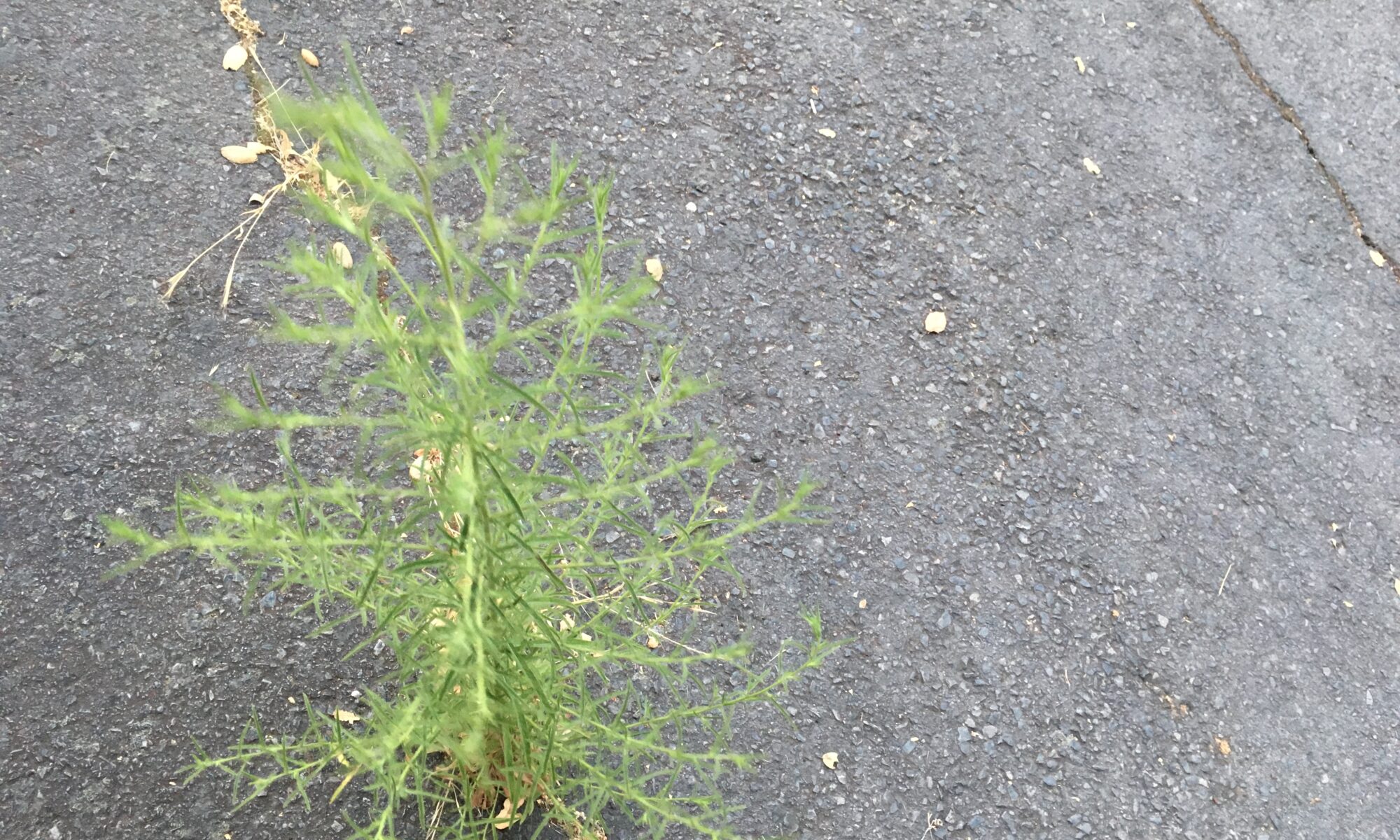
With the water shut down, the once-manicured lawns have blistered brown in the sun — except where the pipes leak. A tangled streak of greenery connects a fire hydrant to the foundation of the shuttered Butler building. Broken branches are heaped on the unkempt lawns, on the sidewalks, on the rooftops. Weeds spring from the cracks in the pavement. Windows are broken, gates hang open, brambles crowd the walkways.

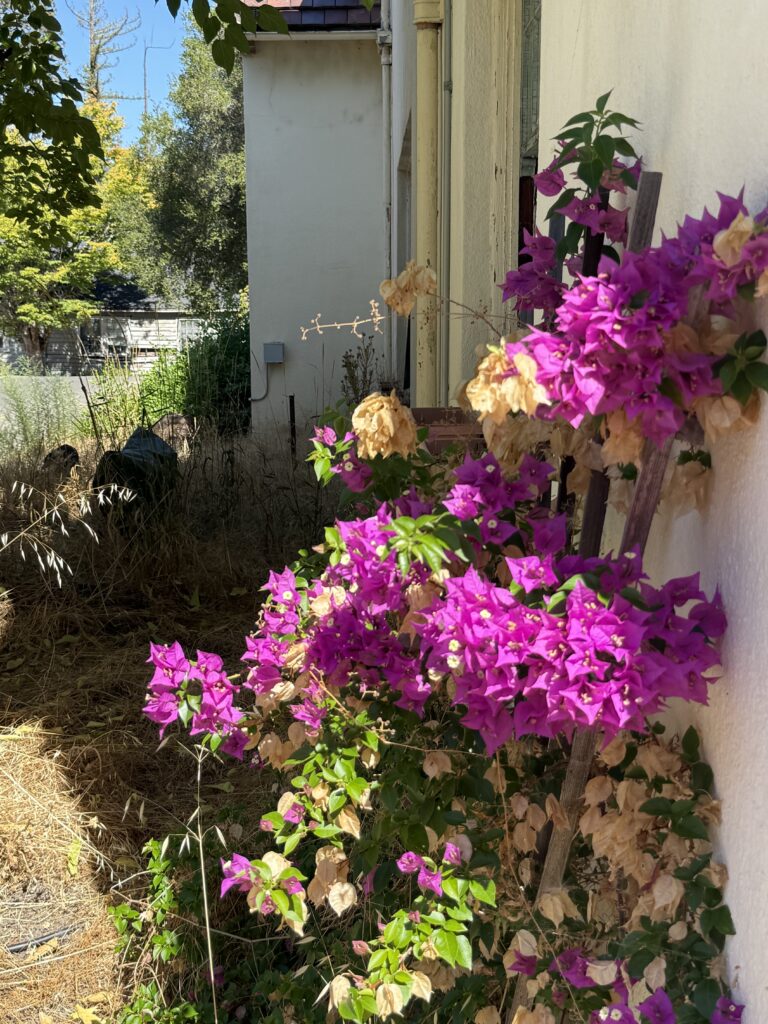
Two flashes of pink catch my eye. One is graffiti that sags with the windowpanes it has been spray-painted across. The other is bougainvillea that somehow, despite being parched and neglected, wraps its vivid blooms around a corner of the Hatch residence.

I make a slow circuit of Sonoma House, which is the main reason I’m following up on the story. Others have been walking in Eldridge as well, and they’ve expressed concerns about the plastic sheeting draped over the venerable Victorian’s complicated rooftop to keep out the rain. The sheeting has begun to disintegrate, shreds of plastic littering the ground and twining in the untended verge. 

In a letter sent to Gerald McLaughlin at the state’s Department of General Services (DGS), Valley resident David Eichar lamented the current conditions. “I am greatly concerned that when it rains, which has already started, the plastic will break down further and end up in Sonoma Creek, becoming an environmental hazard,” he wrote.

“Aware of the situation,” McLaughlin responded, briefly explaining that contractors hired to protect the roof wouldn’t “warranty” the sheeting material. “Working on getting the loose plastic picked up.”

I tried to see if any of the shredded sheeting still strewn about the house had drifted into burbling Mill Creek, just 50 yards or so away, but the creekbank was too overgrown to penetrate. The plastic still slung over the roof was sun-bleached, crispy, and drooping, as was the exterior of the building itself, paint blistering, corners sagging, shingles hanging askew.

Prompted by Eichar, as well as the observations of the dauntless Alice Horowitz, curator of the Eldridge for All website, and Teresa Murphy of the Glen Ellen Historical Society, who laments the neglect in a letter to the editor, I renewed my queries to the powers-that-be: officials at DGS (Gerald McLaughlin among them); officials at Sonoma County, including Supervisor Rebecca Hermosillo; State Assemblymember Damon Connolly; and State Senator Chris Cabaldon. I asked for clarity on who’d take responsibility for landscape maintenance (e.g., clearing fallen trees, cutting the grass, etc.), and for building and infrastructure maintenance (e.g., fixing broken pipes, broken glass, graffiti removal, etc.)? I asked about the leak in front of the Butler Building. I asked about maintenance of the Sonoma House and trash pickup. I asked how long 24-hour campus security will be present, and who is paying the bill.

Matt Brown, County communications specialist, responded promptly with essentially the same answer we’ve been given since we first starting reporting on the story in May: “As the property owner, the State Department of General Services is responsible for maintenance of the Sonoma Developmental Center campus. When the County is made aware of issues, we reach out to our partners at DGS so that they can address them.

When I followed up with a question about whether the County and State had finalized a collaborative agreement regarding site maintenance, Brown replied, “There is no written agreement. When the County is made aware of issues at the SDC property, we communicate with our partners at the State DGS. In that sense, the communication is ongoing.”

Monica Hassan, deputy director with DGS, responded on behalf of the State. “The State currently owns the SDC property,” she confirmed via email. “DGS has made provisions for 24/7 security guard services. The State also continues to coordinate as needed with Sonoma Valley Fire Department to facilitate the fire department’s ability to provide fire response for the SDC property.”

Since that didn’t answer the questions about landscape and building maintenance, I followed up: “Given there are clear infrastructure issues that need attention, who should I talk to at the state about when repairs will be made and when landscaping upkeep will be performed?”

Hassan replied, “The SDC property is currently subject to a disposition process pursuant to state law as well as being the subject of several lawsuits. Therefore, the State is unable to provide additional information regarding the specific structures or features of the property at this time, as these matters are currently pending.”

Well, that was new. Clearly the lawsuit excuse means the State will divulge nothing more about timelines or its responsibilities on the property.

Teresa Murphy, in her letter, wonders whether the neglect is purposeful. I have to wonder the same thing. 

But for what purpose? Is it to punish a community so frustrated with the redevelopment process that it has turned to the courts to be heard? Is it to make the property so dangerous that the community will fall out of love with it and stop fighting for it? (That ain’t gonna happen.)

And seriously: How does running a lawnmower or paying for trash collection affect the outcome of a lawsuit?

But the bigger question is: What now? What happens when a tree falls across Arnold Drive? Who pays for the wasted water? We’ve got fire response, but what about fire prevention?

Talk about liability …

The beauty of the rewilding campus, even as the garbage cans overflow and the trees drop branches onto the rooftops, remains profound. As I walk and document and consider tactics and cry for shame, I also think about my responsibility to the place, the reciprocity I can commit to for its gifts. I cannot replace plastic sheeting; I cannot reglaze windows or replace shingles. But I can pick up plastic. I can bring water to the bougainvillea.

And I can keep asking questions.
Thinking Differently

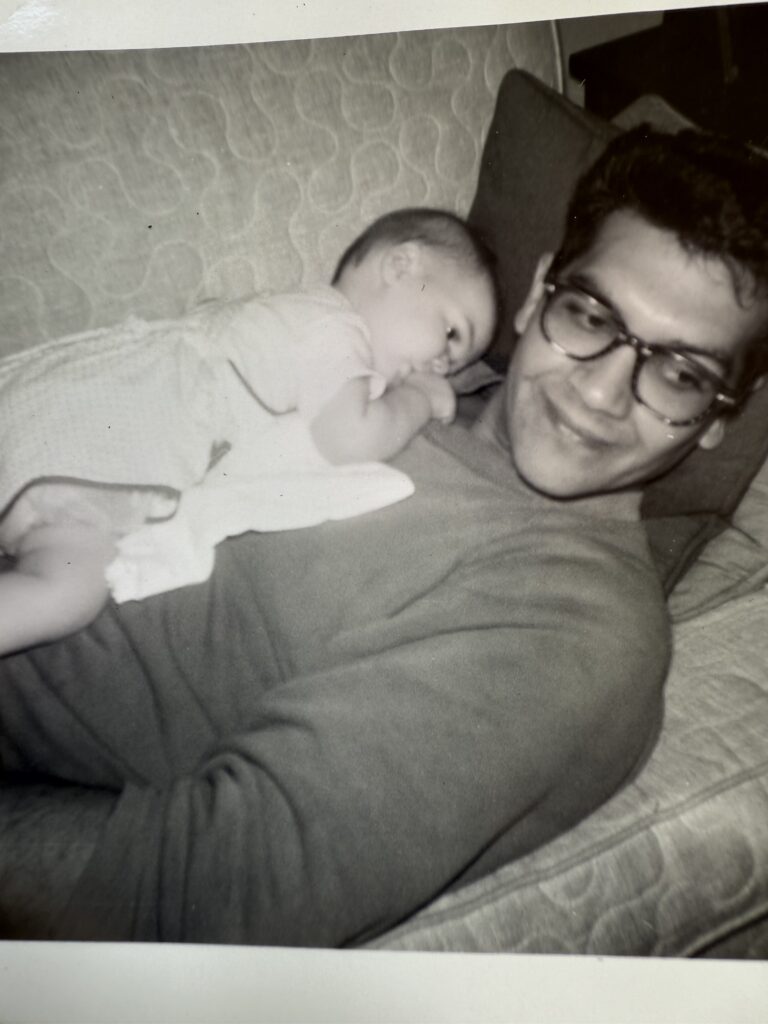
My father is at the end of his good, long life. These days his veins and arteries are failing. He has always been my redwood tree, tall and strong and straight and handsome; exotic and aloof and, at times, incomprehensible. But now the sap runs slowly, sometimes in fits and starts, sometimes so slowly he passes out and my brother or I have to shake him, hoping he’ll wake again.

Now, near the end of his life, he thinks differently. And that has me thinking differently. Thinking differently has been a wonder of mine for a long time, the source of so many questions. I know that I think differently from everyone else … but I also conform to a standard of thinking that doesn’t inspire derogatory or demeaning labels. So do my twin sons: They were born within 10 minutes of each other and raised in the same household by the same people, but even with the same inputs, they think differently from each other, and from everyone around them.

Living so close to the Sonoma Developmental Center (SDC) for so many years, and working in the schools for just as long, I’ve been immersed in the variety of thinking. Children think honestly and with unfettered diversity, even as teachers and parents enforce societal norms — which is important because otherwise there’d be chaos. Thinking like a bully, or in anger, or with too much sadness, warrants intervention, just as being dyslexic, or autistic, or otherwise neurodiverse warrants intervention. Those who think so differently that they are labeled developmentally disabled were once sequestered in state homes like the SDC. The thought was that everyone was more comfortable that way.

But I can’t help wondering how the ones who think so differently that they make us uncomfortable actually see the world. Is how they see the world any more or less valuable than how I see it? Is it any more or less true? How is it that, because of the labels put on their ways of thinking, they are somehow less than, marginalized, diminished?

Circling back to my father, his way of thinking differently has an uncomfortable label: vascular dementia. My brothers and I use our hands to describe how the dementia works: a plateau followed by a precipice, then a slow climb back to a plateau, but a lower one, then boom, another precipice. My father rights himself more slowly after every fall but rights himself nonetheless. He is a redwood tree.

The dementia means he can’t put numbers on certain things; the dementia means he sundowns, the dementia means he has sparks of humor and wisdom when he is, for a flash, the Pa from before. He has also become sweet in a quiet, almost childish way, but he is not a child. He is an old man, full of memory that misfires and cannot always be articulated.

He is in hospice care because he can no longer tolerate hospital care. The cure is now the same as the disease, if old age is a disease. His last hospitalization brought on yet another way of thinking differently: hospital delirium. It was a terrible marvel to witness. My father is blind, but with the delirium, he could see again.

“The doctor’s here,” he said, looking at the closed door of his hospital room. “I just saw him drive up.”

“Tracy, can you get me the scissors? They are right there,” he said, pointing at the blank hospital wall. “In the drawer next to the dishwasher.”

One morning I got a call from my brother, who’d gotten a call from my mother, who’d gotten a call from my father from his hospital bed. “How’d he dial the phone?” we wondered. And then I thought differently. “Maybe,” I said aloud, “Maybe with this dementia, when things misfire in his brain, maybe they can cause the optic nerve to see again …”

Talk about misfire. Turns out the nurse dialed the phone for him.

In his delirium, even with vessels leaking, a heart beating a unique rhythm that set off hospital alarms, and blindness, my father was agitated, and wanted to get up. The strap that kept him in place, for his safety, was outfitted with an apron that had pockets, a zipper, and other components he could manipulate. My mother and I, by filling the hospital room with our familiar voices, were able to settle him down, and he set about exploring the apron with his sensitive, graceful fingers. My mother watched in disbelief; I watched with fascination. To my way of thinking, my father, the carpenter, was trying to fix something. But because the apron looked like a toy, my mother thought he’d become a toddler, and she talked to him that way before she fled, struggling to cope with what she’d seen (and she’s seen so much).

When we brought him home, enveloped in the unexpected warmth of hospice, the delirium resolved and even the dementia eased. My father the redwood tree righted himself again, standing tall on a lower plateau. As we all — my father, my mother, my brothers, and I — meander toward a precipice we won’t see until we’ve gone over the edge, we are all thinking differently. We are thinking about how to make sure my father is comfortable, how to temper my mother’s anxiety, how to navigate the change, disorder, uncertainty, existentialism, sadness, and expectations that we are encountering at the end of his time with us.

My father the redwood tree will topple sooner rather than later. But already, his way of thinking differently has me thinking differently, about all the people who think differently, and the reasons they do. When redwood trees topple, they still have value. Left to lie, they become nurseries. As much as when we were children, my brothers and I are being nurtured by my father. He thinks differently and he’s showing us the way. He is giving us permission to think differently too, and remain beloved.

The Glen Ellen Women’s Club

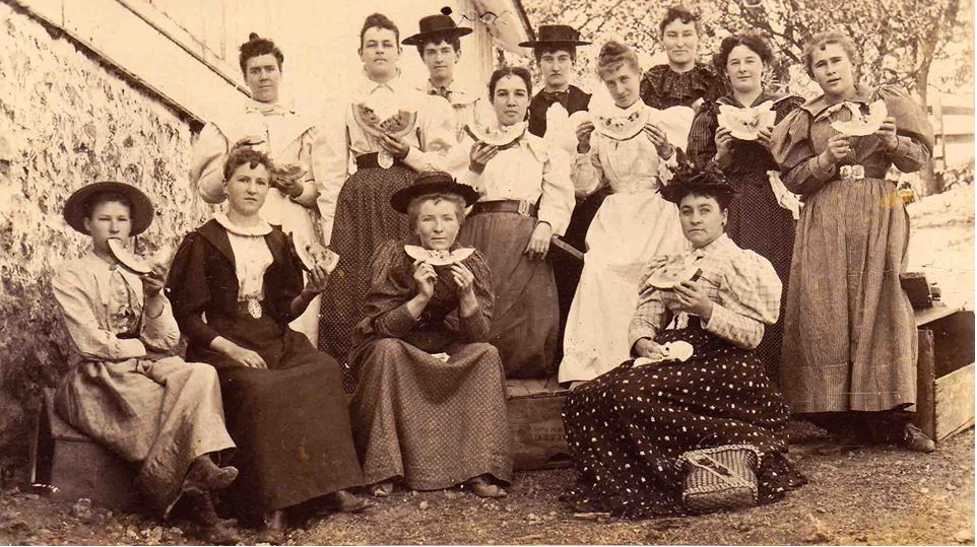
Dear Sadie,

I’ve enclosed a picture of our Glen Ellen Women’s Improvement Association so you can put faces on some of the people I mention in my letters to you. You will recognize me second from right and standing, in that horrid herringbone dress with my hair (as usual) beginning to come undone. And, of course, holding the biggest piece of watermelon amongst the group. As dear Samuel’s father observed, I’ve always been a good feeder. Now that Samuel’s gone, I’m even more inclined to indulge and, as you know, I am passionate about my melon. It was all I could do to not challenge the others to a seed-spitting contest, or to wipe my chin with my herringbone sleeve.

Flora is the flirt standing next to me. Her hair looks blonde in the photograph, but it has strawberry highlights, which match the redheadedness of her nature. Look at that waistline! No hint of a babe, though hers is not yet a year old—I think she uses a winch to tighten her corset. And the tilt of her chin! I’ve told you about her divorce, which was the scandal of Glen Ellen last winter. Poor Flora still invites scandal because, despite her declarations that she is not interested in a suitor—and I believe her!—she cocks her head and smiles her smile and the eyes of men swim with desire. 

There’s also the sad fact that some of the ladies in town, those who don’t know Flora well, perpetuate that scandal. Look over her shoulder, and you see Mrs. Birchbinder. You can’t miss the pucker of her lips, which is not because her bowtie is too tight. She is the wife of poor brow-beaten Mr. Amos Birchbinder, who works in Santa Rosa as a bookkeeper. He probably can’t wait to hop onto the train each morning, simply to escape Mrs. Birchbinder’s perpetual, scowling disapproval. There’s not a proposal that comes before our improvement committee that she doesn’t dissect; I cannot imagine living in a house under that same dour scrutiny. Is that wicked of me?

Mrs. Birchbinder is also not terribly fond of Lola Walker, who is the Amazon standing behind me. Lola is my neighbor, and you’ll not believe this but . . . she’s a former performer in the circus! I kid you not! She is from the Ukraine, and her English is horrific, so I have been unable to learn much about her other than what her husband, Mr. Walker, has shared. This is what I know: Miss Lola used to ride horses under the Big Top back in her home country, and then in New York after emigrating. That’s where Mr. Walker met and married her. Mr. Walker, I might add, is quite the peacock when he is on Lola’s arm, despite being a full head shorter than she. I believe Lola is bored now, here in sleepy Glen Ellen, and has joined the women’s club to enliven days that must seem stultifying compared to circus life.

The lady to my right is Mrs. Paganini, whose husband owns and operates a vineyard just north of the Dunbar School, where I work. I also don’t know much about her—she, like Lola Walker, is an immigrant, and her English isn’t good. But she’s a prodigious breeder. There are twelve Paganini siblings, who range in age from five—little Maude, who is deaf—to Guiseppe, who is seventeen and hardly ever attends school. It’s no wonder the missus hasn’t had time to learn to speak her new home language. That she made this club meeting is something of a wonder. What’s not a wonder is that she can almost out-eat me when it comes to watermelon!

I’m going to skip now to the other side of the photo, where no doubt your eye has been drawn even as I’ve written about the others. Oh, the piercing eyes in that girlish face! And that excellent posture! Miss Ruby Stuart is the daughter of Glen Ellen’s founders, Charles and Ellen Stuart, who live in a stately home on Glen Oaks Ranch, at the foot of the forbidding Mayacamas Mountains. You can probably see from her look, Sophie, that Miss Ruby is a firebrand. She’s only able to speak truth, like it or not, and I adore her. She’s come up though the Dunbar School, and she was a voracious reader, even as she was a tomboy of the first degree. She can probably outride Mrs. Walker, and could probably outbreed Mrs. Paganini, though I suspect she’d put a stop to that before there were twelve offspring in her brood.

Now that I consider the photo, I find the other three seated in the front row quite the juxtaposition. Next to Miss Ruby sits Coraline Hill, who is the new wife of Senator William Hill, one of the wealthiest landowners here in our little town. Senator Hill’s first wife, Agnes, died in childbirth along with her babe not two years’ past, and the good senator was quick to engage Coraline. She’s a newcomer to the women’s club, and she’s a mystery to me. Look at how she sits, even as she sports the fanciest duds of us all—like a man. Now, that is truly wicked of me.

Next to Mrs. Hill sits Ellen Chauvet, wife of one of Glen Ellen’s founding fathers. I’m sure you’ve heard me speak of Joshua Chauvet, who built his fortune as a baker in the gold country, then brought his formidable skills and wealth West, here to Glen Ellen. She doesn’t often attend improvement club meetings, keeping mostly to her home, a fine Victorian across the street from her husband’s Chauvet winery. Rumor is that she tends to tipple, but I’ve not seen her in her cups myself. Does saying the thing, having not seen firsthand, make me more wicked?

The lady in the wonderful polka-dot skirt is one of my fellow school teachers, Miss Jane Parker, who teaches up at the Enterprise School. She and Maudie Guthrie of the Trinity School, wearing white and standing behind Mrs. Hill, adore coming down to attend our meetings, or church, or whatever other social event they can here in town, as their schoolhouses are tiny and secluded. Both have a tendency to talk nonstop when they come into town, even though they have nothing very interesting to say. I imagine that’s because schoolchildren in general don’t care to divulge much of interest to adults, and the Trinity and Enterprise grade schoolers, being reared in the hills, have even less to say than most.

I have circled round the photo back to Mrs. Birchbinder and Flora, or rather to the two ladies standing next to them. As you might have guessed by the similar black brimmed hat, the lady beside Mrs. Birchbinder is her sister, Evelyn Carriger. See the near smile on her face? Evelyn has an entirely different disposition, tending toward the quiet side but also toward a sly humor, often at her sister’s expense. She’s an infrequent participant in the women’s club, as she still lives down valley in her parents’ fine home on the sprawling Carriger Ranch. Her beau, however, is Baxter Serres, whose farm borders the home for the feeble-minded on the south side of town, so she comes up as often as permitted, and always under the watchful, scowling eye of her black crow chaperone.

Señora Carmelita Rodriguez takes center stage in the photograph, and rightly so. She runs what remains of the Los Guilicos ranch just north and west of town, and along with Mrs. Eliza Hood and Mrs. Ellen Stuart, has become a winemaker of some renown. The culture of winemakers, as you might imagine, is dominated by the male sex, and even moreso by the great vintners of France and Italy. But these fine ladies have won awards for both their white wines and reds, as well as their ports and brandies. Mrs. Hood and Mrs. Stuart haven’t made time to join our improvement association, but Señora Carmelita (much to Mrs. Birchbinder’s consternation) plays a leading role, and given her connections to Mexican families throughout the northern Sonoma Valley, is able to identify what we, as a social club, can provide to aid those who are have wants and needs. She is related by blood to the famous (or infamous) General Mariano Vallejo, who established the township of Sonoma down valley, but she herself is only half-Mexican, and like Mary-Ellen Pleasant before her, can pass as a white woman if she chooses. She possesses beauty and intelligence, and I admire her for the fact that she chooses to wear her Mexican heritage proudly, even as the ranchero culture has faded away.

My dearest Sadie, I hope you haven’t found my descriptions of my compatriots too catty, and also that you find it helpful to be able to put faces to the names when I mention them in letters going forward. Perhaps, one day, you’ll be able to make the trip up to Glen Ellen and meet some of these fine ladies in person! I can only hope!

Your loving sister,

Josette

We Remember You: Notes from the Eldridge Cemetery

Unless you read the signs, you might not know it’s there. The Eldridge Cemetery, stretching from Orchard Road down to the broom-choked banks of Mill Creek on the former Sonoma Developmental Center campus, resembles parkland more than a burial ground. Its wrought-iron gates appear to open onto nothing more than a gentle, grassy slope, scattered heritage oaks dripping lace lichens, and stunning vistas of Sonoma Mountain’s summit ridge. A plaque affixed to one of the gate’s stonework pillars and a free-standing rusty metal sign name the place. 

“We remember you” reads the inscription.

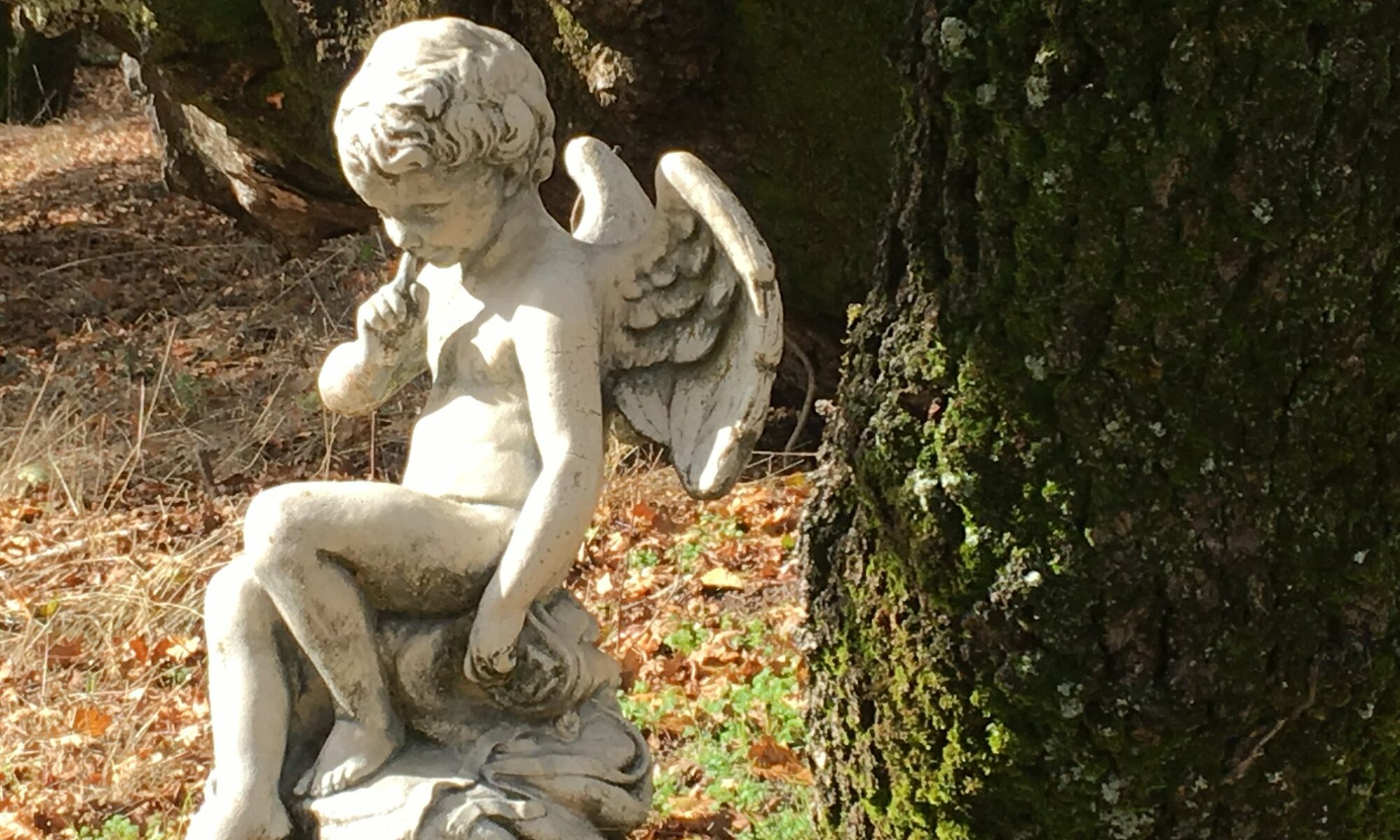
A little guardian angel watches over the grounds, head gently bowed, wings gently folded. She sits in the shade of some old oaks just uphill from the gate. One of the trees has listed, its limbs resting in the embrace of a sister oak that offers steady support, for now. It’s hard to know how long the embrace will last, given how precarious it appears, and the angel looks like she’ll be crushed if the tree falls. But walk down to the sunken vault where the cremains are interred, and you’ll see she’s perched between where the twin trunks will land. It’ll be a narrow miss.

The angel knows what the earth holds here. So does history. Thousands of people who lived in Eldridge—in the institution that started in 1891 as a home for “feeble-minded” children and ended in 2018 as the SDC—are buried here. An astonishing map details where they were laid to rest, tightly packed in long rows stretching from roadside to creekbank. Numbered concrete blocks mark each end of these rows, and a low stone wall forms a boundary along the road, both remnants of the cemetery’s historical hardscape. A photo from 1941 shows headstones at some of the gravesites, but these have long since disappeared, as have the flowers and keepsakes left by the living for the beloved departed. 

To those not in the know, the Eldridge Cemetery may appear stuck in the same quiet, increasingly ramshackle limbo as the neighboring campus. But it’s not. Instead, the cemetery is a place where Eldridge’s story pivots toward something hopeful, not just for the burial grounds, but also for the campus and surrounding open spaces.

The transformation of Eldridge—envisioning how 900-plus coveted acres can be used now that the developmental center is gone—is taking place on many fronts. Folks are working to ensure its open spaces are conserved, on a specific plan to guide campus redevelopment, on a historic district, on proposals for housing and trails and more. Work on the cemetery memorial project has mostly flown under the radar, but achieved a remarkable milestone in recent weeks. The state of California, the proverbial wheel to which all shoulders must be applied before anything can happen on the property, has bestowed its blessing on plans to erect a memorial at the site. Funding is earmarked. Surveyors have been contracted. Work is slated to begin this month. 

Even as pandemic and bureaucracy slows progress on so many plans for Eldridge, this one moves ahead.

The memorial project has been many months in the making, with months of work to go. Community members dedicated to the work include Kathleen Miller, whose son was an SDC resident; Christian Pease, the photographer behind the Eldridge Portrait Project; Kathy Speas, the SDC’s former chaplain; the Glen Ellen Historical Society’s Angela Nardo-Morgan; and many others. They’ve worked tirelessly with champions at the state level, including John Doyle, the now-retired chief deputy director of California’s Department of Developmental Services (DDS); his successor, Carla Castaneda; and Gerald McLaughlin of the Department of General Services (DGS). On the ground at Eldridge, Charlotte Jones, SDC facilities manager (also retired); Valerie Dunn, who took Charlotte’s place; and public information officer JJ Fernandez, have also been integral to the effort. Many months of meetings, site visits, e-mails, phone calls, more e-mails, more site visits, more meetings—and the wheel turned.

The cemetery group has collaboratively developed a conceptual design for the memorial that both preserves the cemetery’s viewscapes and honors all of Eldridge’s dead by name. It turns out administrators of the institution, in all its incarnations, kept records of those interred on the grounds, as well as those buried off-campus, some in Sonoma’s Mountain Cemetery, some in a cemetery in Sebastopol. A map of the rows and graves, and a brief history of the home and hospital, are also part of the plan. 

Across Orchard Road from the cemetery proper, survey work will define an area to ensure ADA-compliant accessibility for visitors, and outline a site where informal memorial markers and artifacts can be displayed. These small monuments—more than fifty placed by families, friends, and staff over the decades—have been carefully gathered from the campus and cataloged as part of the project. 

Once survey work is complete and design details have been fine-tuned, the project will be formally presented to the community. The group knows well how crucial that step is. Proposed improvements may cost more than the state has pledged, and the grounds will require upkeep once the state steps away. Dollars and sweat equity are something local residents can help provide.

I love to walk in graveyards, and always have. Cemeteries are peaceful and grounding in my experience; I’ve always felt the dead welcome visits from the living. The first time I realized Eldridge had a cemetery was probably twenty years ago, when I spotted the guardian angel. I went right down to sit with her a spell. 

As time went on and I became a chronic walker of Orchard Road, I would sometimes break away from the pavement to ramble in the grass, communing as best I knew how with the people resting there. One year, as the season bent toward late summer, I noticed cracks in the slope’s adobe soils, miniature crevasses splintering the earth glacier. I stepped over them quickly, afraid to peer in, afraid I’d spy bones or the splintering wood of a decades-old casket. Quick prayers, a light step, asking for forgiveness if my passage was disrespectful. 

Now that I know how dense the burials are, when I come to visit I keep to the edges. I also hold with care the idea that the graves may be sliding—or have already slid—down toward the creek. Sliding graves are an odd thing to consider, but as disrespectful as walking on graves feels to me, it feels right to imagine that, as they subside, the dead have started to share embraces, like the oaks arcing over the guardian angel. Arm in arm, sharing eternity for as long as it lasts in this beautiful place. 

How nice it will be to know their names.

We remember you.

In Praise of Pavement

Paved trails get a bad rap. Hiking snobs dismiss the paved route as a walking path for wimps.

I’m not that picky. If I have a choice, I’ll usually head out on the dirt, but I love a good paved trail and I’ve walked on plenty. I also hold this perspective close: Most ADA-accessible trails are built using pavement or crushed gravel. They are generally flat, short, and smooth, but what the traveler experiences is not diminished by the composition of the treadway. You don’t have to wear the fancy shoes with the lug soles; you don’t have to worry about burrs in your socks or boot-sucking mud or twisting your ankle in the divot left by the horsehoof. Anyone can go: Grandpa with his stuttering walk, Grandma with her walker; the baby in their stroller, the friend in their wheelchair.

Thinking this way, every path is a trail. Thinking this way, the paved trail saved hiking this year, even for snobs.

When the first shelter-in-place order was issued a year go, the parks closed. All of them. My initial response was panic. I lasted about two days, pacing circles in my yard. I’d always thought all I needed to maintain my mental health was to be outside. The pandemic taught me otherwise. I needed mileage.

Then, the blessing that is my son’s dog became even more apparent. Pandemic rules permitted us to leave the premises to walk the dog. I could walk the dog! So what if Mugi wasn’t mine: Any port in a storm. And the need to walk the dog was real—if she didn’t get her exercise, she would zoomie the house to smithereens.

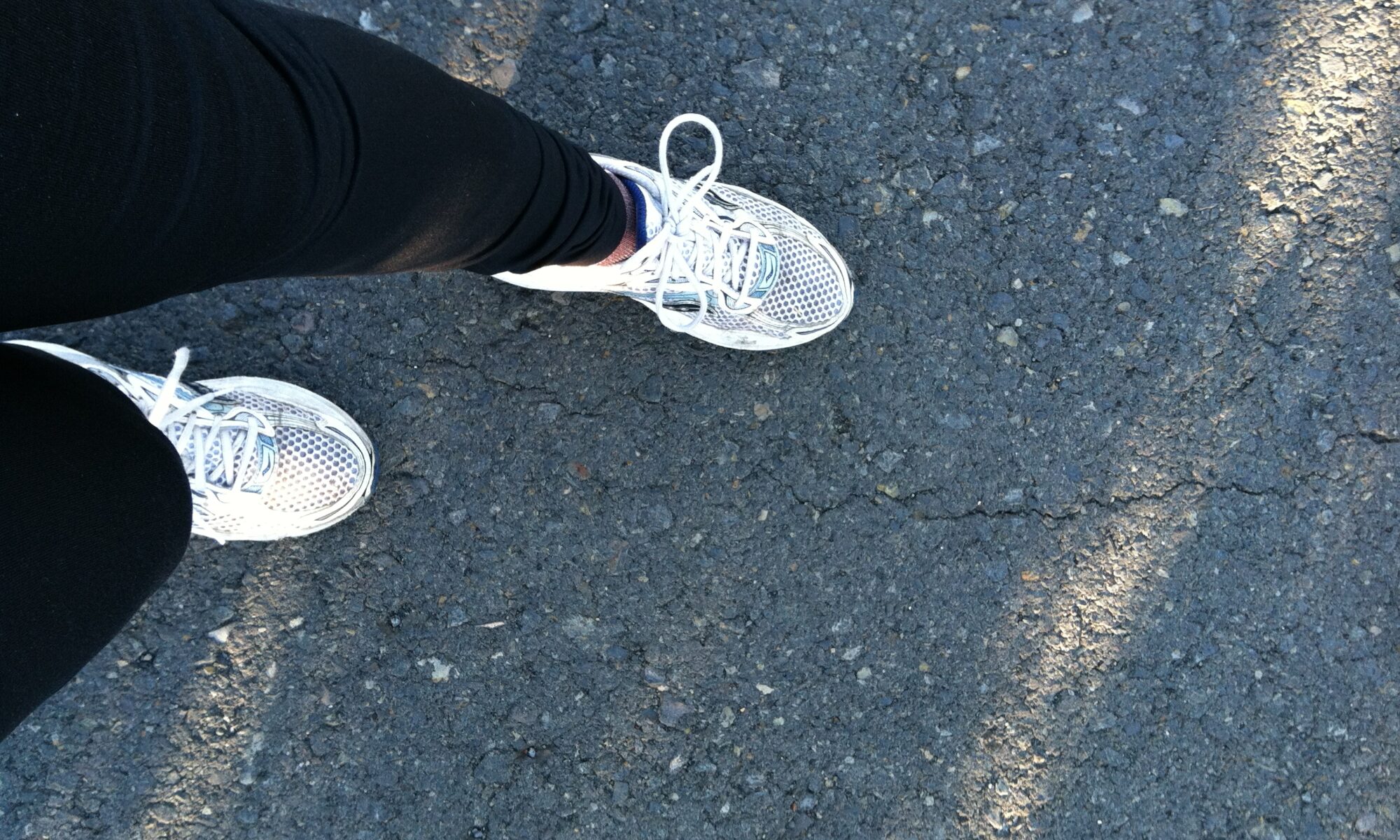
Like so many of my neighbors, I took to the streets. Who knew it took three masked people, walking abreast in a phalanx, to walk a dog? We swept around each other like the wings of birds, sometimes stilling on opposite sides of the road when we recognized each other. We pounded the pavement for miles to see each other, and to let the wind wash pandemic and political doom from our heavy minds.

We are lucky here in Glen Ellen and Kenwood; we have beautiful streets. Without cars on them, they are even more beautiful. But streets are for cars, and as pandemic restrictions and fears lift, traffic will increase. Hiking on pavement will become less attractive; walkers will be driven back to the dirt. No complaints though, because dirt is normal, and we all need normal.

But I cherish the peace I’ve found hiking the double yellow line on London Ranch Road. It became the town’s stairmaster last March, so dubbed by Jack London State Historic Park’s executive director. Given a hefty lead, Mugi can range from verge to verge if I stick to the middle, walking a good four miles for my two. She has smelled the seasons change and I have watched them, from springtime wildflower blooms to the autumnal turning of the grapevines at Benziger to the blooming of moss on tree trunks with the first winter rain. 

Usually, we ramble up to the park’s kiosk and back, taking in the views and the pee-mail. Usually we make way for a car or two, or more, as we walk. But the other evening, we made it all the way up the hill without meeting a soul. Standing at the kiosk in the golden hour, with the sunlight long on the earth, I couldn’t turn back. I decided to take Mugi down the paved trail to the Wolf House. 

And the paved trail got magical.

In most state parks dogs are not allowed on trails, but the route to the Wolf House is an exception. The trail begins in a thicket of eucalytptus, now beautifully restored by park staff to mitigate wildfire danger. Their work has illuminated the fact that these trees were imported as a crop and planted in orderly rows, with the intent to harvest and make lumber or furniture. The wood proved lousy for both purposes, but grew into a sturdy windbreak and, as time went on, a significant fire hazard.

As we’d been on London Ranch, Mugi and I were alone on the trail. We walked down past the vineyards, glowing in the last of the daylight. We walked down through the hollow, where the no name stream ran with just enough water to babble and the ferns grew thick on the embankment. We climbed past the trail to Jack and Charmian’s gravesite, rising into sunshine in the greening meadow before making the final descent to the Wolf House ruins.We made a slow circle around the house, walking slowly, quietly. The crowns of the redwoods were bright, and the sun shot a final burst of brightness through the stone windowframes before it dropped behind the shoulder of Sonoma Mountain.

Then we headed home, still alone in the gloaming. Back through the patch of meadow, back through the hollow, to the junction with the dirt trail that leads up to the House of Happy Walls. I clutched at a memory that this path was also dog-legal; I balked at the thought of leaving the pavement. But only for a moment. I’m a dirt girl at heart. As we climbed the narrow track toward the House of Happy Walls, I swallowed a bug. This, I thought, is my punishment for breaking the rules. Then the trail surface changed to weathered asphalt, and I exhaled my guilt. I was right; dogs were allowed. The bug was just a protein supplement. Every hiking snob knows that.

A Bear Ate Our Car and We Miss It

It seemed so appropriate. Right before he hauled the van away, the little man in the wide-brimmed straw hat turned on the emergency blinkers and honked the horn. It was exactly right, though he could never have known it. Because that was how the van had signaled its final distress.

The story is a classic. Let me take you back a month, to a driveway in a nice subdivision on the west shore of Lake Tahoe. It is five o’clock in the morning. The familiar sound of the van’s horn wakes me; my first thought is that its alarm is going off…but it doesn’t have an alarm anymore. I stumble out of bed to the window and peer outside into a gray-black predawn world. The van’s emergency blinkers are on, and the horn is honking intermittently. I’m confused, so I look closer…and see a great black hairy hulk occupying both front seats of the car.

“Martin,” I call to my sleeping husband. “There’s a bear in the van!”

He’s awake instantly, and leaps from the bed. Feeling brave, curious, and half-witted with drowsiness, he rushes outside; I remain at the window, watching. Afterward, he tells me that at first all he could see was a steamed-up front windshield. Then, like a playful child, the bear pressed its hairy muzzle against the glass. It saw Martin and began to tear the inside of the car apart. Martin saw it and began to cuss like a truck driver.

My husband has no choice, and he’s not happy about it. The bear is now in the driver’s seat, eating the van’s headliner, trying to claw through the roof to freedom. Martin dashes to the opposite side of the car, whips open the sliding door, and runs like hell.

So does the bear, off into the night. I’m now brave enough to leave the house, and stand with my husband at the van’s side, surveying the damage. Wires dangle from the ceiling, bits of the deck lamp are scattered on the front seats, the rear-view mirror and visors are strewn around the car, as are the remnants of one of our son’s smoothies, which had lured the bear inside. Not only are the emergency blinkers on, but so is another son’s metronome. Blinking orange hazard lights, a blaring horn, the incessant ticking of the metronome—the poor creature must have thought it was in some kind of hellish circus. No wonder it wanted out.

We empathized. We are not completely bear ignorant, having lived for fifteen years in bear country in Colorado, and having spent seven weeks traveling through bear country in Canada and Alaska. Never had we had such a close encounter. Never had we had such a thrill. Never had we intentionally left a smoothie in the car, because we know what bears will do for food. It wasn’t the bear’s fault. We wished it well.

But the van did not fare well. With nearly 250,000 miles on the odometer, we knew its swan song was most likely imminent. Still, we gave its salvage a shot, getting an estimate for repairs, talking about options. But the insurance company refused to pay for repairs that might have, ultimately, exceeded the value of the vehicle.

My husband’s regret was immediate. He recognized what I, in my excitement about finally getting a new car, would not see until the little man in the straw hat drove the van away. He knew we were losing an old friend. He knew how much of our history was tied up in the metal and plastic and cloth of what we called, affectionately, the Starship. It was a perpetual motion machine, hauling our sons to play dates and to their first days of kindergarten, transporting new puppies to dog parks and scared kitties to the vet’s office. It carried thousands of dollars of groceries, home improvement supplies, and recreational equipment. It wrote books with me, about Lake Tahoe and Lassen Volcanic National Park, Point Reyes National Seashore and California’s missions and presidios. And, when everyone said we were fools for even considering the idea, that great old van ferried us north to the Top of the World in the Yukon and Alaska. It crossed mighty rivers on metal-bottomed bridges, the Klondike, the Stikine, the Pelly, the Yukon; it wound through the Alaska Range in the shadow of Denali, it rested on the beaches at the toe of the Kenai Peninsula. More than 210,000 miles on the odometer, hauling a tent trailer, and nary a breakdown. That flat tire, of course, was not its fault…

The salvage company called to say they’d haul it away sometime during the next two business days. By the time the second day rolled around, a shiny new car was parked in the driveway, with an infantile 19,000 miles on the odometer. When I got back from running errands in the new car, I found myself strangely reassured to see the van’s broad Zorro smile; it was still parked on the gravel in front of the camper. Call me silly, but I really thought they’d forgotten about it, and that we’d get to keep it. Use it for … I don’t know … garden art …

But then the bright yellow flatbed truck drove by, and I knew the van’s time had come. The fellow in the straw hat parked down the road, then walked back up, climbed in, started it up, and drove it off. I furiously swept leaves around the driveway, scolding myself for being so emotional, for being so materialistic. I was mourning, after all, for a stupid car!

But this was no ordinary car. Not anymore. I looked at the new car, asked it please to treat us as well as the Starship, then ran down the garden path to the fence along the road, where I hunkered behind a bay tree and watched the little man in the straw hat prepare the Starship for departure. He opened doors, adjusted chains, and finally turned off the emergency blinkers. I hunkered down, and yes, I wept. And I wondered at the things that hold our memories. I thought about the dear friend who lost her mother when we were teenagers. She once complained that her father’s new wife, of whom she was fond, refused to give her a stool that had belonged to her mother, and how that filled her with great sorrow. A stool, a block of wood and fabric, a little thing … yet in that stool, Kelly knew her mother, felt her mother, could touch her mother. A car, I know, holds no candle to that kind of remembrance. But it holds memories nonetheless—in our fortunate sakes, of so many good times—and I regret its loss.

I can only pray that our new shiny car, which shifts so easily, feels so cozy, smells so new, treats us as well as our old van. I’m glad that I’m not just “getting over it.” It’s shallow, it’s American, but it’s real. The Starship will be missed.

Falling

A story of humility and a primer on what hikers should always carry in their packs

This was not my finest hour.

Last month, while hiking with my friend Nick, I slipped on a steep pitch of trail and folded my ankle over onto a rock. The impact fractured the base of my fibula, but I didn’t know that in the moment. All I knew was it hurt like hell and I needed to lie down.

Nick, following my lead, gave me space, then gave me a stick, then two sticks, then his arm. The thinking was if I could stand and hobble, maybe I could make it back to the trailhead without much fuss and the hike wouldn’t be a complete loss. We were five-and-a-half miles into what would have been a lovely seven-mile ramble through the backcountry of Jack London State Historic Park and the Sonoma Developmental Center, following trails we both know well. A snoop around Camp Via, a blossom hunt in the old orchard, a visit to the ancient redwood—the grandmother tree, too gnarly and difficult to be brought down, just like me.

Or not.

The fall happened on the downhill run, as we were approaching Fern Lake. All adventurers  know if something’s gonna go wrong, it goes wrong on the descent. Blink. Slip, twist, down. And down for the count.

I knew I’d probably broken something. There was a telltale crunching noise in the disasterous mix. But I’m prone to rolling my ankles, so as I lay in the dirt trying to settle my stomach, I held out hope that’s all it was—a bad roll. After a few long moments I stood up, hoping to carry on.

No go. Two sticks and Nick’s strong arm notwithstanding, when I put weight on my right foot, pain ricocheted around unhelpfully. I got clammy and queasy and had to lie down again, while Nick paced the fire road, a self-described “brilliant humorist at the height of his powers,” saying helpful, apparently hilarious things I can’t remember.

Eventually I sat back up and began rifling through my daypack for my first aid kit, looking for a painkiller. I am a hiking guidebook writer, after all. I carry all kinds of nerdy equipment no matter the length of a chosen ramble. Emergency blanket, check. Water purifying tablets, check. Buck knife, check. First aid kit … crapola.

I did have a small flask of whiskey, however—a throwback to my circumambulation on the Tahoe Rim, when we would end long days on the trail with a bone-warming tipple. If a cowboy could medicate with whiskey before the doc dug the bullet out, a shot oughta get a hiker with a bum ankle down a trail, right?

I took a swig. I stood. A blast of pain, and my stomach revolted. I threw it up.

My predicament wasn’t an emergency, I insisted to Nick, after he propped me up against a log. We’d been discussing ego earlier on the hike, and mine took firm control of the decision-making process. I am a hiking guidebook writer, after all. I’m all about self-sufficiency in the woods. We needed to figure out how to get off the mountain without summoning the National Guard — and it turned out the National Guard was a distinct possibility, since a passing mountain biker told us a unit was training on SDC that day, along with the sheriff and the fire department. A helicopter flew overhead. I sank deeper into the log.

Fortunately we were close to home, we had cell phone coverage, and together Nick and I sorted our options. Plan A involved calling the non-emergency lines at the Eldridge Fire Department and SDC police department to see if we could get someone to open a couple of gates; that way one of my sons could drive up and retrieve me. Plan B involved calling friends who own land bordering the SDC; Steve knows the web of trails better than anyone, and has a four-wheeler that could get me out easily. Plan C involved crawling and crying.

Plan A was a wash: My son ended up leaving messages that weren’t returned until several hours later, when I was being treated in the emergency room. Calling 911 would have gotten us a quicker response, but … well, hiking guidebook writer …

Fortunately, Plan B was a success. Several “where are you again?” calls were necessary, because SDC’s trails aren’t marked and must be described using language better suited to wayfinding in the nineteenth century. After clarifying our location with reference to creeks and dams, Steve and my son navigated to my rescue.

Time of fall to time of arrival back in civilization was, all in all, about two hours. We got a little cold while we waited, but both Nick and I had layers. If we’d had to wait longer, even overnight, we had food and emergency shelter and ways to purify the water Nick could have retrieved from the nearby creek. There would have been crying and crawling, but we were equipped for survival. Hiking guidebook writer, after all.

I’ve done a lot of thinking about what happened on the mountain since the accident, if for no other reason than I can’t do much else. In researching Search and Rescue Alaska (where I wrote about survivors) and Death in Mount Rainier National Park (where everybody dies), a significant common denominator became crystal clear: The folks who survive bad breaks of all kinds in the wild are the ones who are prepared, and who follow bad luck with good choices. Nick and I didn’t compound a bad situation with bad decisions. We didn’t panic. We didn’t despair. We were prepared, mentally and physically, to cope. Our resilience was in the layers we carried ward off the cold, and in the good humor we shared as we waited.

I’m a solo hiker—I’ve walked most every trail in the guides I’ve written alone. I’ve had more than my fair share of uh-ohmoments; I’ve also had more than my fair share of good luck. In this instance, luck took the form of a clear-thinking companion. But I also carry luck with me, in my pack, on my back. Even without Nick, even without first aid kit, I would have been just fine.

What’s In My Pack

Water; hat and gloves; lightweight jacket; buck knife and pocketknife; emergency blanket; pepper spray; flashlight; whistle; notebook and pen; cell phone; Camera, tablet, GPS unit (if wporking on a guidebook); paracord; first aid kit; oop bags for the dog; poop bag for myself (TP + ziplock bags to pack it out); water purification tablets + ultraviolet water-purification wand; medicinal candy (Sour Patch Kids. Trust me.); electrolyte tablets; snacks; flask of whiskey (optional)

Published May 1, 2021, in the Kenwood Press