

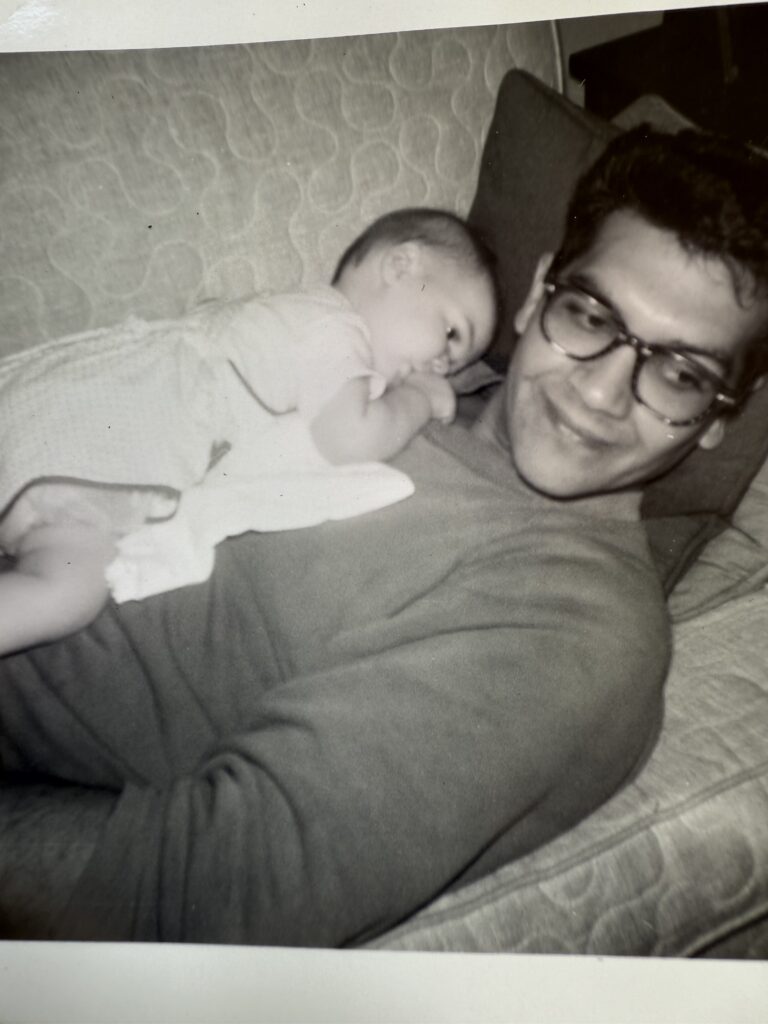
My father is at the end of his good, long life. These days his veins and arteries are failing. He has always been my redwood tree, tall and strong and straight and handsome; exotic and aloof and, at times, incomprehensible. But now the sap runs slowly, sometimes in fits and starts, sometimes so slowly he passes out and my brother or I have to shake him, hoping he’ll wake again.
Now, near the end of his life, he thinks differently. And that has me thinking differently. Thinking differently has been a wonder of mine for a long time, the source of so many questions. I know that I think differently from everyone else … but I also conform to a standard of thinking that doesn’t inspire derogatory or demeaning labels. So do my twin sons: They were born within 10 minutes of each other and raised in the same household by the same people, but even with the same inputs, they think differently from each other, and from everyone around them.
Living so close to the Sonoma Developmental Center (SDC) for so many years, and working in the schools for just as long, I’ve been immersed in the variety of thinking. Children think honestly and with unfettered diversity, even as teachers and parents enforce societal norms — which is important because otherwise there’d be chaos. Thinking like a bully, or in anger, or with too much sadness, warrants intervention, just as being dyslexic, or autistic, or otherwise neurodiverse warrants intervention. Those who think so differently that they are labeled developmentally disabled were once sequestered in state homes like the SDC. The thought was that everyone was more comfortable that way.
But I can’t help wondering how the ones who think so differently that they make us uncomfortable actually see the world. Is how they see the world any more or less valuable than how I see it? Is it any more or less true? How is it that, because of the labels put on their ways of thinking, they are somehow less than, marginalized, diminished?
Circling back to my father, his way of thinking differently has an uncomfortable label: vascular dementia. My brothers and I use our hands to describe how the dementia works: a plateau followed by a precipice, then a slow climb back to a plateau, but a lower one, then boom, another precipice. My father rights himself more slowly after every fall but rights himself nonetheless. He is a redwood tree.
The dementia means he can’t put numbers on certain things; the dementia means he sundowns, the dementia means he has sparks of humor and wisdom when he is, for a flash, the Pa from before. He has also become sweet in a quiet, almost childish way, but he is not a child. He is an old man, full of memory that misfires and cannot always be articulated.
He is in hospice care because he can no longer tolerate hospital care. The cure is now the same as the disease, if old age is a disease. His last hospitalization brought on yet another way of thinking differently: hospital delirium. It was a terrible marvel to witness. My father is blind, but with the delirium, he could see again.
“The doctor’s here,” he said, looking at the closed door of his hospital room. “I just saw him drive up.”
“Tracy, can you get me the scissors? They are right there,” he said, pointing at the blank hospital wall. “In the drawer next to the dishwasher.”
One morning I got a call from my brother, who’d gotten a call from my mother, who’d gotten a call from my father from his hospital bed. “How’d he dial the phone?” we wondered. And then I thought differently. “Maybe,” I said aloud, “Maybe with this dementia, when things misfire in his brain, maybe they can cause the optic nerve to see again …”
Talk about misfire. Turns out the nurse dialed the phone for him.
In his delirium, even with vessels leaking, a heart beating a unique rhythm that set off hospital alarms, and blindness, my father was agitated, and wanted to get up. The strap that kept him in place, for his safety, was outfitted with an apron that had pockets, a zipper, and other components he could manipulate. My mother and I, by filling the hospital room with our familiar voices, were able to settle him down, and he set about exploring the apron with his sensitive, graceful fingers. My mother watched in disbelief; I watched with fascination. To my way of thinking, my father, the carpenter, was trying to fix something. But because the apron looked like a toy, my mother thought he’d become a toddler, and she talked to him that way before she fled, struggling to cope with what she’d seen (and she’s seen so much).
When we brought him home, enveloped in the unexpected warmth of hospice, the delirium resolved and even the dementia eased. My father the redwood tree righted himself again, standing tall on a lower plateau. As we all — my father, my mother, my brothers, and I — meander toward a precipice we won’t see until we’ve gone over the edge, we are all thinking differently. We are thinking about how to make sure my father is comfortable, how to temper my mother’s anxiety, how to navigate the change, disorder, uncertainty, existentialism, sadness, and expectations that we are encountering at the end of his time with us.
My father the redwood tree will topple sooner rather than later. But already, his way of thinking differently has me thinking differently, about all the people who think differently, and the reasons they do. When redwood trees topple, they still have value. Left to lie, they become nurseries. As much as when we were children, my brothers and I are being nurtured by my father. He thinks differently and he’s showing us the way. He is giving us permission to think differently too, and remain beloved.